TIJ Printer for Cartons, Labels and Pouches
A batch number printed on a carton, label or pouch has to do more than look clear for a few seconds. It may need to remain readable after packing, handling, transport and scanning. If the code smears, fades or is entered incorrectly, the result can be rework, rejected packs or traceability problems.
A TIJ printer for cartons, labels and pouches is used to print variable information such as batch numbers, manufacturing dates, expiry dates, MRP, barcodes, QR codes, logos and serial numbers. Thermal Inkjet technology is often selected for high-resolution coding where the printhead can be positioned close to a controlled print area.[domino-printing][uplimark]
What is a TIJ printer?
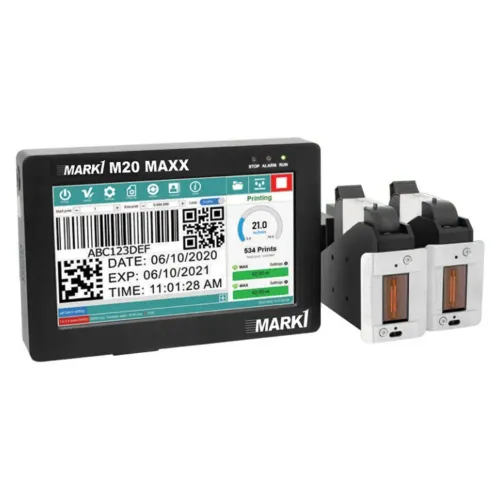
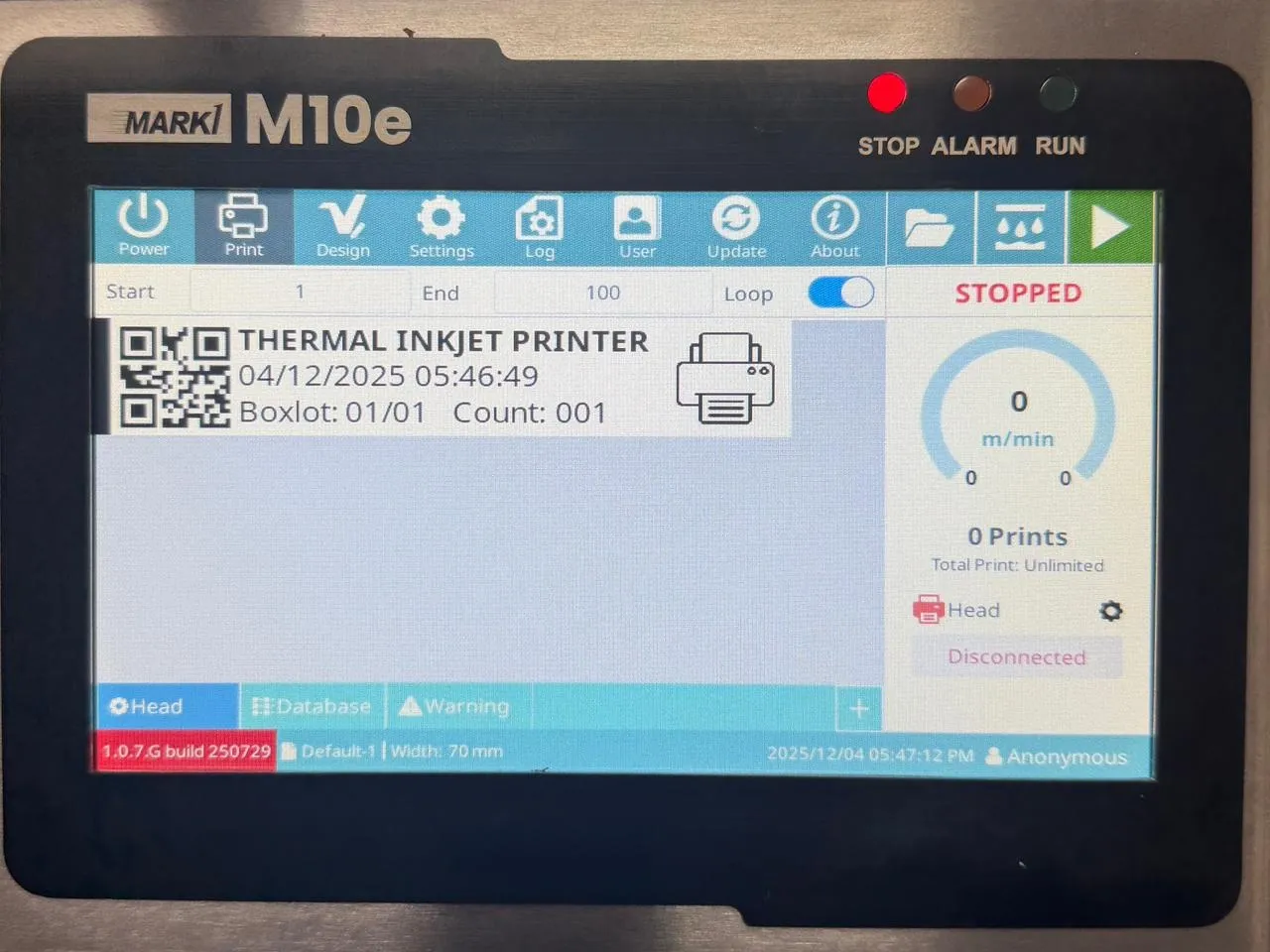
A Thermal Inkjet printer uses a replaceable ink cartridge and electronically controlled ink droplets to create text, graphics and machine-readable codes. The message is created digitally, so operators can change product data without replacing a printing plate or rubber stamp.
TIJ printers may be used as:
- Handheld coding devices.
- Tabletop printers.
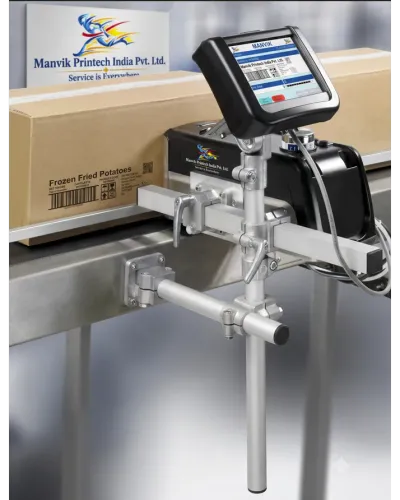
- Online printers mounted beside a conveyor.
- Multi-head systems for larger print areas.
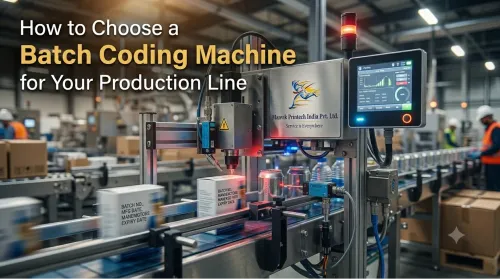
- Integrated systems connected to sensors, encoders, PLCs or databases.
The suitable configuration depends on the packaging material, line speed, print height, product spacing and required code.
Coding on cartons
Cartons and boxes are common TIJ applications, particularly in pharmaceutical, FMCG, cosmetic, food and industrial packaging.
A TIJ printer can be used for:
- Batch and lot numbers.
- Manufacturing dates.
- Expiry dates.
- MRP.
- Product codes.
- Barcodes.
- QR codes.
- Serial numbers.
- Short logos or messages.
Water-based inks are generally used for absorbent materials such as uncoated paper and some cartons. Coated cartons, glossy folding boxes and laminated packaging may require a suitable solvent-based ink. The actual surface should be tested because carton coatings and varnishes affect adhesion and drying.[uplimark][gorgeoustij]
Common carton problems
- The ink spreads into the paper fibres.
- Glossy coating prevents proper adhesion.
- The code smears during folding or packing.
- The QR code is too small to scan.
- The product shifts before the print is completed.
- The batch message is selected incorrectly.
A sample print should be checked after drying, folding, packing and rubbing. If a barcode or QR code is required, scan it using the equipment used in the production or warehouse process.
Coding on labels
Labels may be made from paper, synthetic film, coated stock or thermal materials. The label surface, adhesive, liner and application method can all affect the result.
TIJ printers may print:
- Product identification.
- Batch and expiry data.
- Serial numbers.
- Barcodes and QR codes.
- Variable customer information.
- Short product descriptions.
Label printing is useful when each product requires different information. It can also support traceability when labels are applied to bottles, jars, cartons or industrial parts.
What to check on labels
- Whether the surface is porous or non-porous.
- Whether the coating absorbs or repels ink.
- Whether the label is printed before or after application.
- Whether the label moves on a web or is applied individually.
- Whether the ink dries before rewinding or handling.
- Whether the barcode remains readable after application.
A printed label can appear clear before application but become distorted when wrapped around a small bottle or curved container. Test the label in its final position.
Coding on pouches and flexible packaging
Pouches and flexible packaging may contain several layers, including plastic film, foil, adhesive, printed graphics and protective coatings. The outer surface determines how the ink behaves.
TIJ can be evaluated for:
- Food pouches.
- Pharmaceutical sachets.
- Cosmetic sachets.
- Detergent packs.
- Flexible FMCG packaging.
- Laminated films.
- Sachets and small packs.
Specialty solvent-based inks may be required for films, foils, plastics and other non-porous surfaces. Some ink formulations are designed for difficult films and heavy-gauge plastics, but the correct selection must be verified through an application test.[global.videojet]
Common pouch problems
- The film is glossy or metallised.
- Ink does not adhere to the outer layer.
- The pouch wrinkles during printing.
- The code smears during filling or sealing.
- The printhead is too far from the surface.
- The film moves at changing speed.
- The code is printed over a busy background.
- Heat from sealing affects the mark.
Testing should continue after filling and sealing. The code must be checked under the same handling conditions it will experience in production.
Why high-resolution coding matters
TIJ systems are often used when the packaging needs small text, detailed graphics, barcodes or 2D codes. Some industrial TIJ systems support resolutions up to 600 dpi, but the actual print quality depends on the printer, ink, printhead distance, message size, speed and substrate.[global.videojet]
High resolution does not solve every coding problem. A QR code can still fail when:
- It is too small.
- Contrast is insufficient.
- The surface is distorted.
- The code is printed over a seam or fold.
- Product movement causes stretching.
- Data is incorrect.
- The scanner is unsuitable.
Code size and placement should be decided with the scanning requirement in mind.
Choosing the right TIJ ink
Ink selection is one of the most important parts of a TIJ installation.
Water-based ink
Often considered for absorbent materials such as:
- Uncoated cartons.
- Paperboard.
- Corrugated boxes.
- Paper labels.
It may not adhere well to glossy films, plastic or metal unless the surface is specially treated.
Solvent-based ink
Often evaluated for non-porous or coated surfaces such as:
- Flexible films.
- Foils.
- Plastic.
- Glossy cartons.
- Treated labels.
- Selected metal or glass surfaces.
The required drying time, odour, chemical resistance and handling conditions must be considered.
The cartridge name alone is not enough to confirm compatibility. Test the ink on the actual packaging and rub the code after the expected drying time.
TIJ printer or CIJ printer?
TIJ is often considered when the print zone is flat or well controlled and high-resolution text or codes are needed. CIJ may be more suitable when the product is curved, moving continuously or difficult to keep close to the printhead.[uplimark]
RequirementTIJ printerCIJ printerCommon packagingCartons, labels, pouches and boxesBottles, cans, pipes, cables and curved productsPrint qualitySuitable for sharp text, barcodes and QR codesSuitable for small-character coding on moving productsInk systemReplaceable cartridgeInk and make-up fluid systemPrinthead positionUsually close to the surfaceCan work with greater stand-off distanceMain selection issueCartridge and substrate compatibilityInk, line speed and printhead-system maintenanceTypical installationHandheld, tabletop or onlineCommonly integrated with continuous lines
The decision should be based on the product and production process. A sample test is more reliable than selecting a printer only from the packaging name.
How to choose a TIJ printer
Before requesting a quotation, provide:
- Carton, label or pouch sample.
- Material and surface finish.
- Required message and number of lines.
- Barcode or QR-code format.
- Print height and available area.
- Production speed.
- Product spacing.
- Handheld or online requirement.
- Ink colour and drying time.
- Handling, filling and sealing conditions.
- Scanner or verifier requirement.
- Daily operating hours.
Ask the supplier to test:
- Print clarity.
- Adhesion.
- Drying time.
- Smudge resistance.
- Barcode and QR-code readability.
- Print position.
- Performance at line speed.
- Effect of folding, sealing and packing.
Problems a TIJ printer can help solve
A TIJ printer may help replace:
- Manual stamping on cartons.
- Pre-printed batch labels.
- Handwritten dates.
- Repeated label changes.
- Unclear product identification.
- Separate coding operations away from the packaging line.
It will not automatically solve incorrect data entry, unstable product movement or unsuitable packaging surfaces. Message control, operator training and sample testing remain important.
Request a sample coding test
If you are considering a TIJ printer for cartons, labels or pouches, share the actual packaging material and the information you need to print.
Include:
- Batch and date format.
- MRP requirement.
- Barcode or QR-code artwork.
- Approximate line speed.
- Print location.
- Handling after printing.
- Required resistance to rubbing, moisture or chemicals.
A sample evaluation can show whether TIJ is suitable or whether CIJ, TTO, CO₂ laser or UV laser should be considered instead.
FAQs
Can a TIJ printer print on cartons?
Yes. TIJ is commonly evaluated for cartons, boxes and paperboard. The ink must match the carton’s porosity and coating.
Can a TIJ printer print on pouches?
It can be suitable for selected pouches and flexible films. Solvent-based ink may be required for non-porous or laminated packaging, but the actual pouch should be tested.
Can it print barcodes and QR codes?
Yes. TIJ systems can print 1D barcodes, QR codes and other 2D codes when the code size, contrast and substrate are suitable.
Which ink is suitable for glossy labels?
A suitable solvent-based or specialty ink may be required. The correct choice depends on the label coating, drying time and handling conditions.
Is TIJ suitable for pharmaceutical cartons?
TIJ can be evaluated for pharmaceutical cartons, labels and selected packaging. Code clarity, data accuracy and scanning should be validated for the specific application.
Is a handheld or online TIJ printer better?
A handheld printer may suit varied or lower-volume work. An online TIJ system may be better when cartons, pouches or labels move repeatedly on a conveyor and the print position must remain consistent.
How can I prevent pouch codes from smearing?
Test a compatible ink, keep the printhead at the recommended distance, control the pouch position and allow enough drying time before filling, sealing or packing.
Suggested internal links
Link this article to relevant live pages:
- TIJ Printer.
- Thermal Inkjet Printer.
- Online Inkjet Printer.
- Industrial Inkjet Printer.
- CIJ Printer.
- Batch Coding Machine.
- Barcode Laser Marking Machine.
- CO₂ Laser Coding Machine.
- Pharmaceutical Coding Solutions.
- FMCG Coding Solutions.
- Food and Beverage Coding Solutions.
Send your carton, label or pouch sample with the required code and production speed. A print and scanning test can help determine the suitable TIJ printer and ink.
Keywords