

Description
Product details
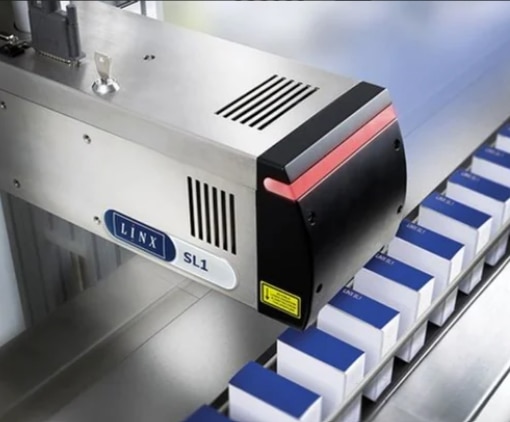
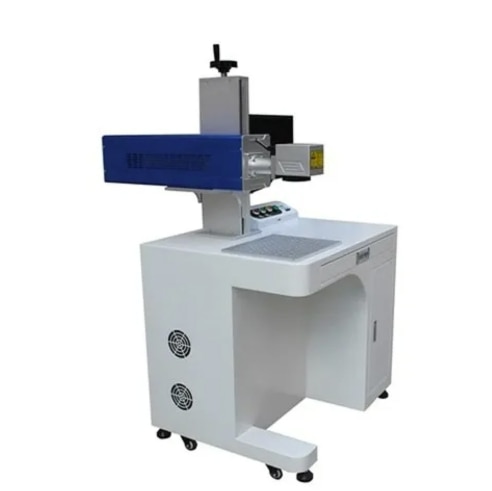
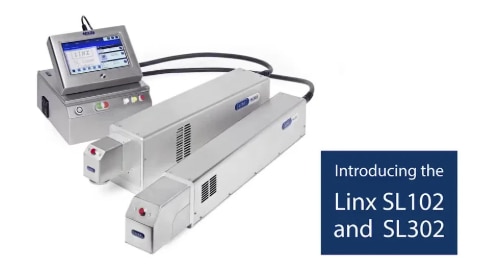
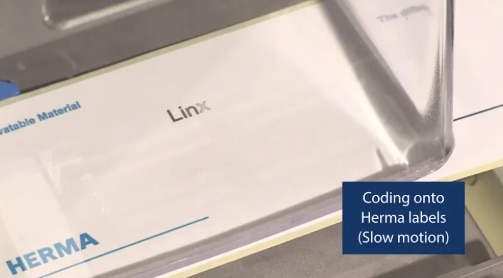
Laser Coding and Marking Machines CO₂ Laser Coding System A compact CO₂ laser coding system for permanent, non-contact marking on suitable packaging and product materials. It can mark batch numbers, manufacturing dates, expiry dates, text, logos, serial numbers and selected machine-readable codes without ink or ribbon. Its compact design is suitable for production environments where installation space is limited. The system uses a software for message creation and can be configured with production-line accessories such as a product sensor, encoder, beam protection, exhaust unit, stand and safety interlock module. The actual marking result depends on the product material, colour, coating, line speed, message size and selected lens. A sample test should be completed before installation. Suitable applications may be evaluated for marking on suitable: Plastic packaging. Paper and cardboard. Labels and coated materials. Selected films. Wood and other compatible non-metal surfaces. Typical marking information includes: Batch and lot numbers. Manufacturing dates. Expiry dates. Product codes. Serial numbers. Text and logos. 1D barcodes. QR codes and other 2D codes, subject to size and scanning tests. Product features No ink or ribbon The laser creates the mark directly on the product or packaging. This removes ink and ribbon consumption for the coding process. Routine inspection, optics care, safety checks and suitable extraction may still be required. Compact construction The SL1 is designed for installation in production environments with limited space. Its stainless-steel body and available industrial accessories support integration near suitable production lines. Non-contact marking The laser does not touch the product. Depending on the material and process settings, it can create a surface colour change, remove a coating or produce a shallow mark. Verified specifications Specification Verified information Model Laser Marking Machine Laser type Sealed CO₂ laser Laser power class 30 W , 40 W. Standard wavelength 10.6 µm Cooling Internal air cooling Laser safety class Class 4 according to IEC 60825-1 Software ManvikDraw Enclosure Stainless steel Electrical input Autorange 100–120 V and 200–240 V, single phase Frequency 50/60 Hz Power requirement Approximately 350 VA Operating temperature 5–35 °C Humidity 10–90%, non-condensing Available accessories Beam protection, exhaust unit, product sensor, encoder, stand and safety interlock module Marking content Text, dates, logos and machine-readable codes, subject to configuration Operation Production-line integration with suitable accessories The exact marking area, lens, line speed and code capacity should be confirmed for the supplied configuration. Specifications to remove from the original entry The following values should not be published for the Linx SL1 unless separate documentation confirms that they belong to another machine: 20 W laser power. 355 nm wavelength. Water cooling. Model number 7900. 100,000-hour laser life. 6,000 mm/s marking speed. 150 W per minute print speed. 120 or 100 pieces per minute without defined test conditions. 110 V AC as the only power-supply description. Made in India. Fully automatic operation without a defined conveyor and control configuration. The documentation identifies the system as a 10 W sealed CO₂ laser with a standard 10.6 µm wavelength and internal air cooling. The 355 nm specification belongs to UV laser systems and should not be combined with this CO₂ model. Application testing Before selecting the machine, test the actual product or packaging. Check: Mark contrast. Text clarity. Barcode or QR-code readability. Product speed. Marking position. Resistance to rubbing. Effect of coatings or laminations. Exhaust and safety requirements. The same laser settings may not produce the same result on different plastic grades, coatings or coloured materials. Product enquiry information For a technical evaluation, provide: Product or packaging sample. Material and surface finish. Required batch, date, barcode or QR message. Approximate production speed. Product spacing and orientation. Required marking location. Whether the code must be scanned. A sample test can determine whether a CO₂ laser is suitable or whether another technology, such as TIJ, CIJ, fiber laser or UV laser, should be considered.