Batch Coding Machines for Barcode and QR Code Applications: A Complete Buyer's Guide
Barcodes and QR codes have quietly become the backbone of modern supply chains — retailers won't shelve products without them, pharma regulators demand traceable serialisation, and buyers scan a QR code before they trust a batch. If yours are getting rejected, smudged, or simply aren't sharp enough to scan, the problem usually isn't the code design — it's the batch coding machine printing it. This guide walks MSMEs, pharma companies, FMCG brands, and food & beverage manufacturers through the main technologies available and how to choose the right one.
Common Barcode & QR Code Problems on Production Lines
- Codes rejected by scanners at the retailer, pharmacy, or distribution centre
- Low print resolution unable to render dense 2D QR or DataMatrix codes clearly
- Smudging or fading on wet, curved, glossy, or flexible packaging surfaces
- GS1 or CDSCO compliance failures due to insufficient barcode contrast or accuracy
- High downtime from machines needing frequent cleaning, nozzle clearing, or ribbon changes
- Mismatched technology for the surface — using the wrong printer for cartons vs. film vs. metal
- Rising consumable costs that eat into per-unit packaging margins over time
Each of these usually traces back to one root cause: the wrong batch coding technology for the surface, speed, or code complexity involved.
What Is a Batch Coding Machine?
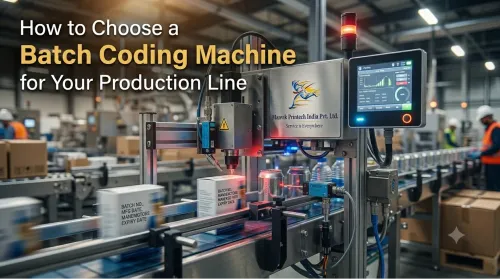
A batch coding machine prints variable data — batch numbers, manufacturing and expiry dates, MRP, barcodes, QR codes, logos, and serial numbers — directly onto a product or its packaging during production. Batch codes are what let a retailer, regulator, or end customer trace a product back to its exact production run. As barcodes and QR codes have become standard requirements rather than optional extras, the print resolution and reliability of the batch coding machine itself has become just as important as the code's design.
The Five Main Technologies — At a Glance
1. Continuous Inkjet (CIJ)
Sprays a continuous stream of charged ink droplets, ideal for high-speed lines and curved or wet surfaces like bottles, pouches, and cables. Good general-purpose barcode printing, though resolution is typically lower than TIJ or TTO for very dense codes.
2. Thermal Inkjet (TIJ)
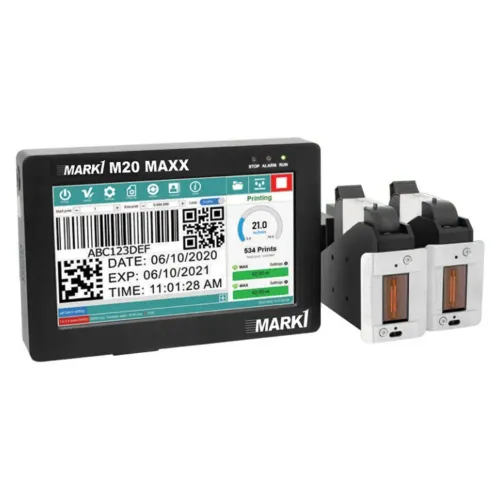
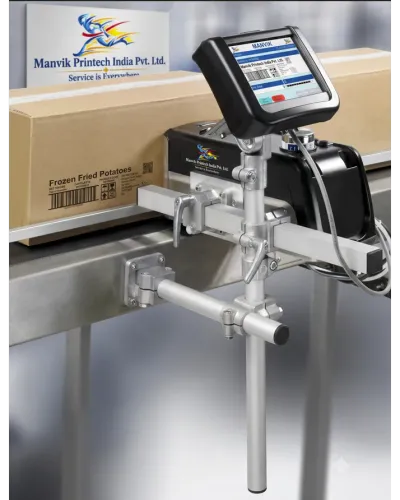
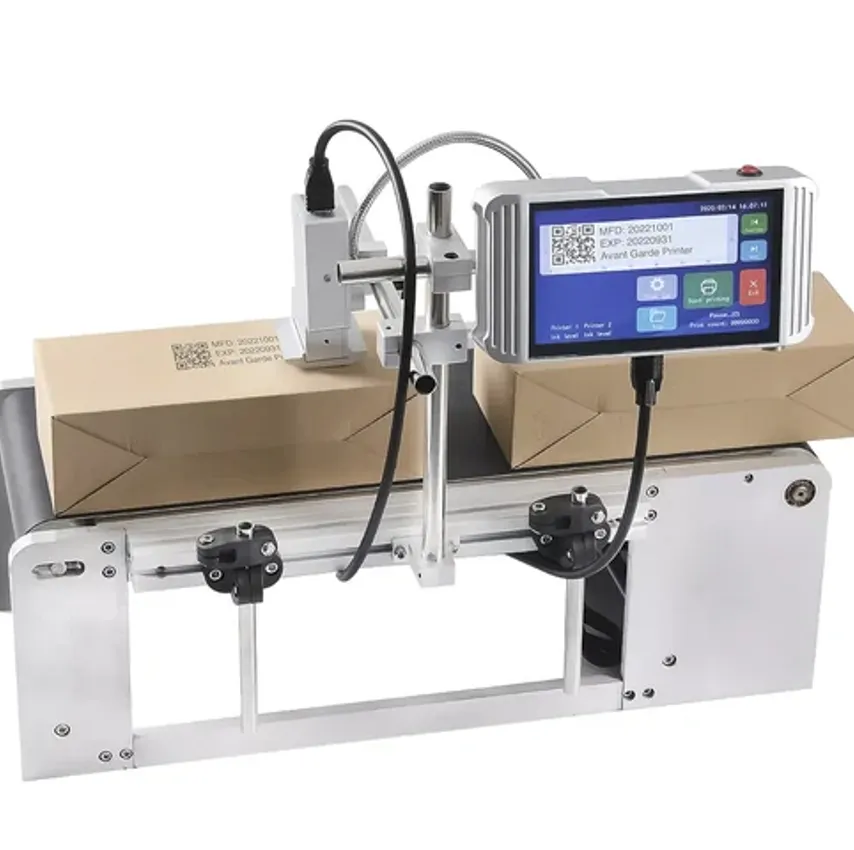
Uses a sealed, cartridge-based print head to fire high-resolution droplets (300-600 DPI), making it the preferred choice for sharp barcodes and QR codes on flat cartons, labels, and paperboard — widely used in pharma and FMCG secondary packaging.
3. Thermal Transfer Overprinting (TTO)
A heated ribbon presses ink directly onto flexible film — pouches, sachets, and flow-wrap packaging — producing sharp, instantly-dry, high-resolution codes ideal for GS1-compliant barcodes on flexible packaging.
4. Laser Marking (Fiber / CO2 / UV)
Uses a focused beam of light to etch a permanent, tamper-proof code with zero consumables — the standard choice for metal, glass, and rigid plastic where a barcode must survive harsh handling or long shelf life.
5. Handheld Inkjet Printers
Portable, battery-powered units for marking oversized, irregular, or low-volume items — cable drums, pipes, sacks, or rework batches — where a fixed-line printer isn't practical.
Which Technology Fits Your Barcode/QR Application?

Industry-Specific Applications
- Pharmaceutical companies: CDSCO-compliant carton serialisation (TIJ), blister and strip pack coding, permanent marking on rigid containers (Laser)
- FMCG brands: GS1-ready barcodes on secondary cartons (TIJ), QR codes on flexible pouches and wrappers (TTO)
- Food & beverage units: date and batch coding on bottles, cans, and sachets (CIJ/TTO), traceability QR codes on cartons (TIJ)
- Manufacturing units: permanent part identification on metal components (Laser), on-site marking of pipes, drums, and cable reels (Handheld)
How to Choose the Right Batch Coding Machine
- Identify your code requirements first: simple date code, dense 2D barcode, or serialised QR code — this determines the resolution you need.
- Match the technology to your surface: flat carton, flexible film, curved bottle, or rigid metal each favour a different technology.
- Factor in line speed and volume: high-speed continuous lines need different technology than low-volume or multi-location operations.
- Calculate total cost of ownership: compare upfront cost against consumables (ink, ribbon, cartridges) over 3-5 years, not just the purchase price.
- Confirm local service and consumable support: uptime depends on how quickly spares, ink, and technical support are available in your region.
Batch Coding Machines — Delhi NCR, Western & Southern India
Manvik Printech India Private Limited supplies, installs, and services the full range of batch coding technologies — CIJ, TIJ, TTO, Laser, and Handheld Inkjet printers — for MSMEs, corporates, pharmaceutical companies, FMCG brands, food & beverage units, and manufacturing plants across Delhi NCR, with support extending to western and southern India. If your barcodes or QR codes are failing scans or compliance checks, our team can assess your product, packaging material, and line speed to recommend the right technology.
Frequently Asked Questions
Which batch coding machine is best for barcode and QR code printing?
It depends on your surface: TIJ is generally best for cartons and labels, TTO for flexible film packaging, and Laser for permanent codes on metal or glass — each delivers high enough resolution for dense 2D barcodes and QR codes.
Can one machine handle all my barcode coding needs?
Not usually — most manufacturers run two or more technologies across different packaging lines, since no single technology is optimal for every surface type.
Why do my QR codes fail to scan even though they look fine?
QR codes need sharp edges and high contrast to scan reliably; low-resolution print technology or the wrong ink-to-surface match are the most common causes of scan failures, even when the code looks acceptable to the naked eye.
Is a batch coding machine necessary for GS1 or CDSCO compliance?
Yes — regulatory and retail compliance increasingly requires high-resolution, scannable barcodes and serialised QR codes, which need a properly matched batch coding technology to print reliably at production speed.
Where can I buy a batch coding machine in Delhi NCR?
Manvik Printech India Private Limited supplies and services CIJ, TIJ, TTO, Laser, and Handheld batch coding machines across Delhi NCR, with support extending to western and southern India.
Keywords