Handheld Inkjet Printer Machine: A Practical Guide for Product Coding and Marking
A product does not always need a label to carry important information. A manufacturing date, batch number, expiry date, serial number or identification code can often be printed directly on the product or its packaging.
For manufacturers, the challenge is choosing a coding system that fits the production process, material and printing requirement. A handheld inkjet printer machine can be useful when products need variable information printed at different locations, when the items cannot easily be brought under a fixed printer, or when production involves smaller batches and changing print requirements.
Handheld inkjet printers are used for applications such as carton coding, pipe marking, cable coding and batch printing. Current models available in the Indian market vary considerably in print height, ink type, speed, connectivity and supported surfaces, so the machine should be selected according to the actual application rather than simply its advertised specifications.
What is a handheld inkjet printer machine?
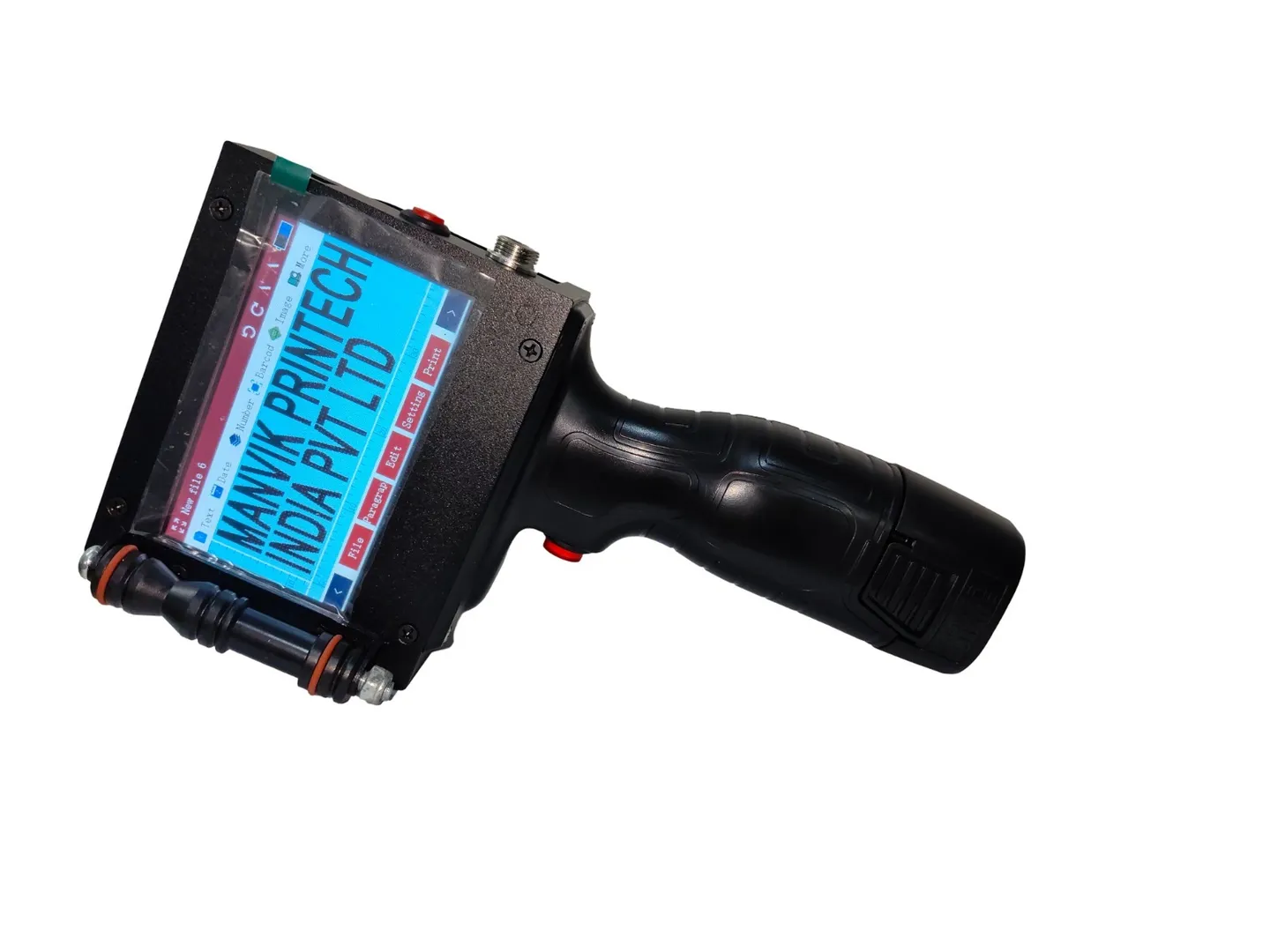
A handheld inkjet printer is a portable coding and marking machine that allows an operator to print information directly onto a product, component, package or other suitable surface.
Unlike a fixed printer installed permanently on a conveyor, a handheld unit can be moved from one item to another. This makes it useful for production environments where the products vary in size or where printing has to be carried out away from a fixed production line.
Depending on the model, a handheld printer may support information such as:
- Batch numbers
- Manufacturing dates
- Expiry dates
- Serial numbers
- Product names
- Text and identification codes
- Barcodes
- QR codes
- Logos or simple graphics
The exact printing capability depends on the printer, software, cartridge and substrate being used. Buyers should therefore check the specifications of the particular model before selecting it for production.
How does a handheld inkjet printer work?
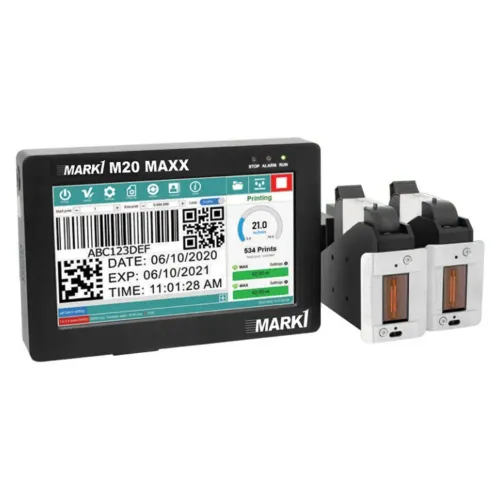
Most handheld industrial inkjet printers are designed around a printhead, ink cartridge, control interface and portable power source.
The operator first creates or selects the message to be printed. The printer then deposits small droplets of ink onto the selected surface as the printhead passes across it.
Some handheld models use Thermal Inkjet (TIJ) technology. Cartridge-based systems are available in the market, with different ink formulations intended for different surfaces. For example, water-based and solvent-based inks can have different suitability depending on the substrate and drying requirements.
This is why choosing the ink should be treated as part of choosing the printer.
A machine that produces good results on a carton may not produce the same result on a smooth plastic, metal or coated surface.
Where are handheld inkjet printers used?
The main advantage of a handheld printer is flexibility.
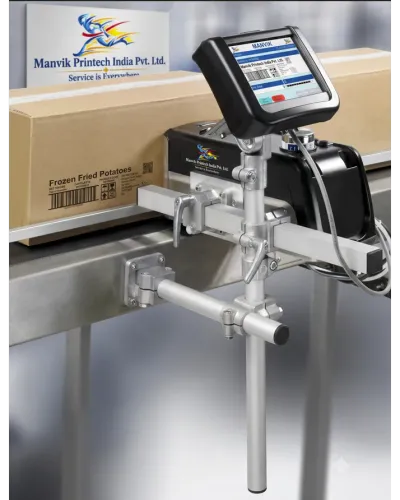
Carton and packaging coding
Manufacturers can use handheld printers to add batch information, dates, product identification and other variable information to cartons and packaging materials.
This can be useful where different products or batches require different messages.
Pipe marking
Plastic and other industrial pipes may require identification marks during manufacturing or handling.
A handheld printer can be moved along the pipe, allowing the operator to print the required information without relying on a permanently installed printing position.
Cable coding
Cable manufacturers and electrical component businesses may need identification information on cables or related packaging.
The appropriate printer and ink must be selected according to the cable material and the required durability of the mark.
Product and component marking
Some manufacturing environments involve components that are too large, irregular or difficult to position on a conventional fixed printer.
A portable printer gives the operator more freedom to approach the product instead.
Warehouse and logistics identification
Handheld coding can also be useful when cartons, crates or other items need identification after they have been packed or moved away from the main production line.
What can you print with a handheld inkjet printer?
The answer depends on the specific model.
Common applications include:
Text:
Product names, codes, model numbers and other identification information.
Dates:
Manufacturing dates, expiry dates and other date-related information.
Batch information:
Useful for identifying a particular production batch or lot.
Serial numbers:
Individual identification numbers can be used where the printer supports variable numbering.
Barcodes and QR codes:
Some models support machine-readable codes, but the required print resolution, size, contrast and substrate should be checked before using them for a particular application.
Logos and graphics:
Certain printers can store or import graphics, depending on their software and memory capabilities.
Which materials can be printed?
There is no single material list that applies to every handheld inkjet printer.
Different machines and cartridges are designed for different substrates. Products available in the Indian market are advertised for materials including cardboard, plastic, metal, wood, glass, labels, pipes and other packaging surfaces.
The important point is that the material and ink must be compatible.
Before purchasing a printer, a manufacturer should test the actual production material rather than relying only on a general statement such as 'prints on plastic' or 'prints on metal.'
A proper sample test can answer practical questions such as:
- Does the ink adhere properly?
- How quickly does it dry?
- Is the print readable?
- Does it smudge during handling?
- Does the mark remain visible after normal exposure?
- Is the print size suitable for the product?
These tests can prevent an otherwise suitable-looking machine from becoming a poor fit for the application.
Handheld inkjet printer vs fixed coding machine
The right choice depends on the production process.
A handheld printer makes more sense when:
- Products are handled individually.
- Printing locations change.
- Product dimensions vary.
- Production volumes are moderate.
- A fixed conveyor installation is inconvenient.
- Operators need to print at different locations.
A fixed coding system may be more suitable when:
- Products continuously move through a production line.
- Printing needs to happen automatically.
- Print position must remain highly consistent.
- Production speed and automation are major requirements.
Neither approach is automatically suitable for every factory.
The decision should start with the production process rather than the machine category.
What should you check before buying a handheld inkjet printer?
1. Printing surface
Start with the material you need to print on.
A carton, plastic film, metal component, glass container and cable can require different ink characteristics.
2. Print height
Check the maximum print height supported by the specific model.
For example, Manvik's current listed handheld models include machines with different print-height specifications, including a listed M6 model with a 12.7 mm print height.
Do not choose a machine based only on the maximum number. Match the print height to the actual message you need to produce.
3. Ink type
Ink selection affects adhesion, drying and print performance.
Water-based and solvent-based inks are not interchangeable for every application. The printer supplier should confirm which cartridge and ink formulation are appropriate for the intended substrate.
4. Printing speed
Speed becomes important when the operator needs to mark a large number of products.
However, maximum advertised speed should not be the only consideration. Actual performance can depend on print content, print resolution, movement speed, surface and operating conditions.
5. Battery operation
Portability is one of the reasons manufacturers consider handheld printers.
Check the expected operating time, charging arrangement and whether the battery can be replaced or serviced.
6. User interface
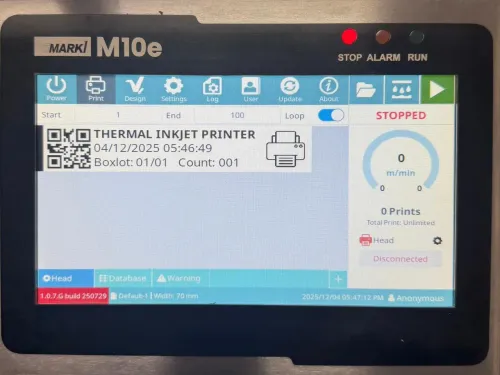
A simple interface can make a difference when operators regularly change batch numbers, dates or product messages.
Touchscreen interfaces are available on some current handheld models.
7. Connectivity
Depending on the machine, messages may be transferred or managed through interfaces such as USB or other connectivity options.
Check the exact model specification rather than assuming that every handheld printer supports the same connection method.
8. After-sales support and consumables
The machine is only one part of a coding setup.
Before purchasing, ask about:
- Ink cartridge availability
- Replacement parts
- Technical support
- Warranty
- Operator training
- Maintenance
- Sample testing
For a production environment, the availability of consumables can be just as important as the initial machine price.
Why sample testing matters
A product specification sheet can tell you the print height, speed and available features.
It cannot always tell you how the final mark will behave on your specific product.
Consider a manufacturer printing on a glossy plastic surface. A printer may technically support plastic, but the actual result still depends on the particular plastic, surface finish, ink formulation, print distance and operating conditions.
For this reason, manufacturers should provide a sample of the actual material for testing whenever possible.
A good test should evaluate the finished mark rather than just whether ink appears on the surface.
Choosing a handheld inkjet printer for a business in Delhi NCR
Delhi NCR has a wide manufacturing and industrial base, so the requirements of one business can be very different from another.
A packaging company may need carton and pouch coding.
A pipe manufacturer may need continuous identification marking.
A cable manufacturer may have different requirements for adhesion and readability.
A smaller manufacturer may mainly need a portable solution for changing batches and occasional coding.
For these reasons, the right handheld inkjet printer should be selected after understanding:
- What material needs to be printed?
- What information needs to be printed?
- How frequently does the message change?
- How large must the print be?
- How quickly does the operator need to print?
- Is the printer being used online or offline?
- What level of automation is actually required?
- Which ink is suitable for the surface?
- What consumables will be required?
- What technical support is available?
These questions are more useful than choosing a machine simply because it has the highest advertised speed or the longest feature list.
Handheld inkjet printers from Manvik Printech India
Manvik Printech India Pvt. Ltd. supplies printing and coding equipment for industrial applications, including handheld inkjet printer solutions.
Suggested URL: https://www.manvikprintechindia.com/products/category/handheld-inkjet-printer/1
Its currently listed handheld printer range includes applications such as batch coding, pipe coding, cable coding and carton coding. The company's listed M6 handheld TIJ model, for example, is specified for surfaces including cable, plastic, carton, wood, glass, metal and pipe, with a listed 300 dpi printing quality and 12.7 mm print height.
Because printer performance depends on the material, ink and message requirements, businesses should discuss their actual application before selecting a model.
For manufacturers in Delhi NCR, a practical evaluation can begin with the product sample, required print content and production method.
Frequently Asked Questions
What is a handheld inkjet printer machine?
A handheld inkjet printer is a portable industrial coding machine used to print information such as dates, batch numbers, serial numbers, text and, on supported models, barcodes or QR codes onto suitable products and packaging.
Can a handheld inkjet printer print on plastic?
Some handheld printers can print on plastic, but the result depends on the specific plastic surface and ink formulation. Sample testing is recommended before production use.
Can it print batch numbers and expiry dates?
Yes, handheld coding machines are commonly used for variable information such as batch numbers, manufacturing dates and expiry dates, subject to the capabilities of the selected model.
Can handheld inkjet printers print on metal?
Some models and ink types are designed for metal surfaces. The actual metal grade, surface condition and required durability should be tested before purchase.
Is a handheld inkjet printer suitable for small manufacturers?
It can be useful for smaller production operations because the printer can be moved between products and does not necessarily require a permanent conveyor installation. Suitability still depends on production volume and the required coding process.
How do I choose the right handheld inkjet printer?
Start with the material, required print size, message type, production volume, printing speed, ink requirement and operating method. Testing the actual product material is one of the most useful steps before purchasing.
Final takeaway
A handheld inkjet printer machine is not simply a portable printer. It is a coding tool that has to work with the product, ink, production process and information being printed.
For one manufacturer, the priority may be carton coding. For another, it may be pipe or cable marking. Someone producing several small batches may care more about quick message changes and portability.
The practical way to choose a machine is to start with the application and work backwards to the printer.
If you are looking for a handheld inkjet printer machine in Delhi NCR, Manvik Printech India can evaluate the printing requirement, material and coding application to help identify a suitable machine and ink combination.
Keywords