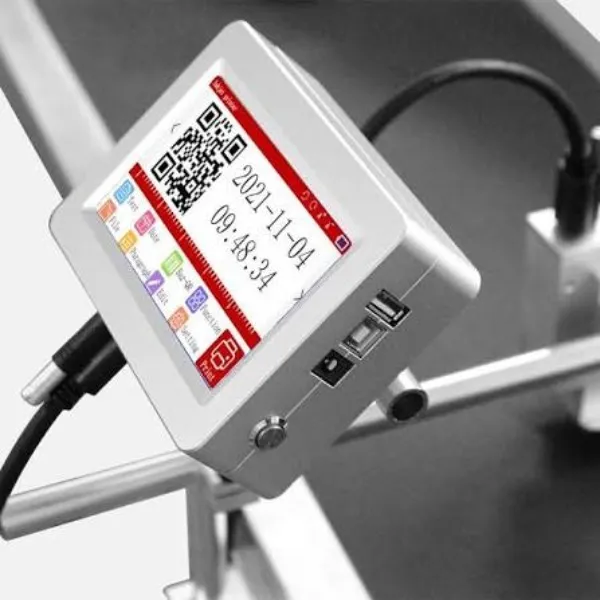
Industrial Coding and Marking Machines in Delhi NCR
A production line can manufacture a good product and still lose time because the coding process is unreliable. A batch number may be missing, an expiry date may be unclear, or a QR code may not scan after the pack reaches the warehouse.
Industrial coding and marking machines help manufacturers print or mark this information directly on products, packaging and components. In Delhi NCR, these systems are relevant to pharmaceutical units, FMCG manufacturers, food processors, packaging companies, engineering units, cable producers and other businesses working around Delhi, Noida, Ghaziabad, Faridabad and Gurugram.
The right machine depends on the material, message, line speed and required durability. A carton may need a high-resolution TIJ printer, while a moving bottle, pipe or cable may require a CIJ printer. A metal component may be better suited to a fiber laser.
What do coding and marking machines print?
These machines are used for variable and fixed product information, including:
- Batch and lot numbers.
- Manufacturing dates.
- Expiry dates.
- MRP and product prices.
- Serial numbers.
- Product and part numbers.
- 1D barcodes.
- QR codes and Data Matrix codes.
- Logos and short messages.
- Cable, pipe and metre markings.
- Traceability information.
A suitable machine should print the required information clearly at the actual production speed. A printer that works well on a stationary carton may not be suitable for a curved bottle or a continuous extrusion line.
Which machine is suitable for your product?
Thermal Inkjet Printer
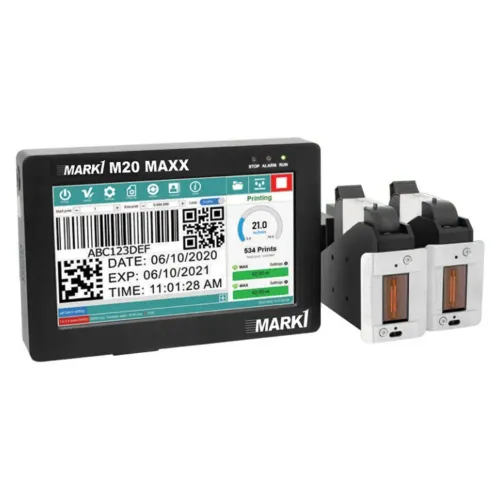
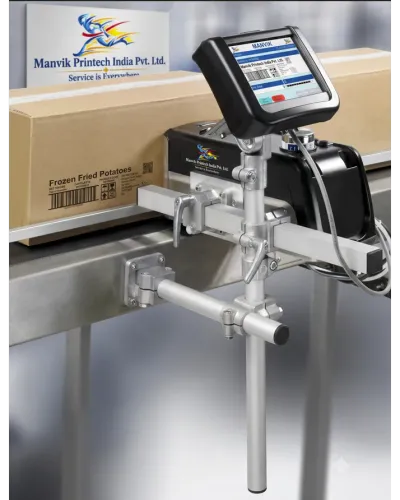
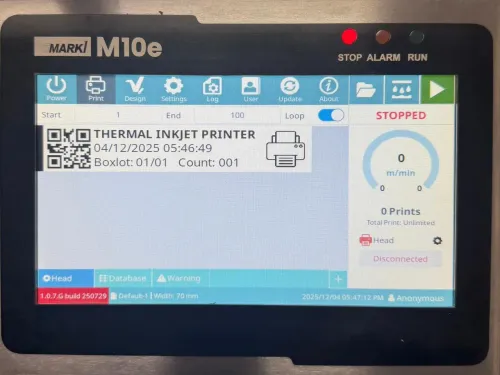
A Thermal Inkjet, or TIJ, printer is commonly evaluated for sharp text, batch numbers, dates, barcodes and QR codes on cartons, labels, pouches and selected packaging surfaces.
It may suit:
- Pharmaceutical cartons.
- FMCG packaging.
- Food pouches.
- Labels and paperboard.
- Secondary packaging.
- Online conveyor coding.
The cartridge and ink must match the surface. Glossy, laminated, wet or oily packaging should be tested before installation.
Continuous Inkjet Printer
A Continuous Inkjet, or CIJ, printer produces non-contact codes while products move along the line. It is often considered for bottles, cans, wires, pipes, films, cables and components.
It may suit:
- PET and glass bottles.
- Beverage cans.
- Plastic containers.
- Pipes and profiles.
- Wires and cables.
- Curved or uneven components.
- High-speed production lines.
CIJ systems use ink and make-up fluid, so the total operating cost includes consumables, maintenance and service requirements.
Online inkjet printer
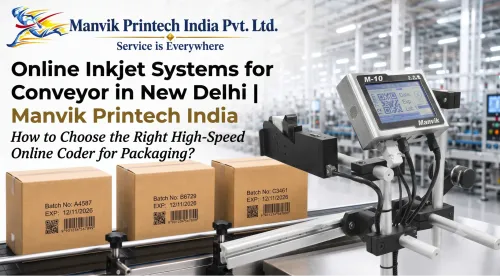
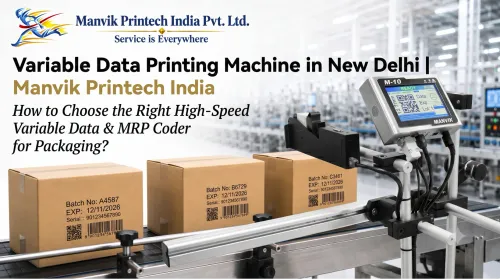
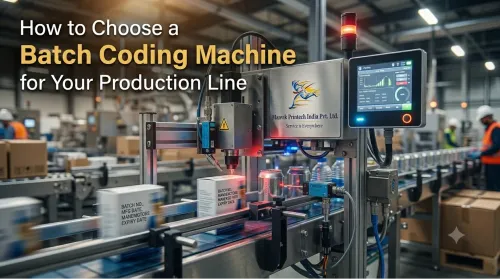
An online inkjet printer is integrated with a conveyor or packaging line. A sensor detects the product and triggers the print at a selected position.
This arrangement can reduce manual stamping and improve position consistency. Product guides, sensor timing and conveyor stability are important. If pouches or cartons move unpredictably, the printed code may shift even when the printer is working correctly.
Fiber laser marking machine
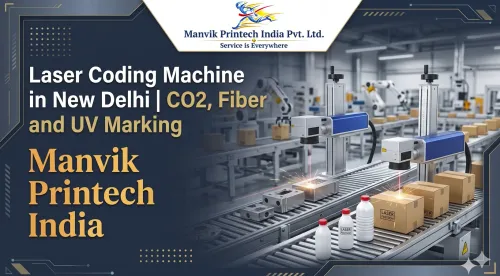
Fiber laser systems are commonly evaluated for durable marking on metals such as stainless steel, aluminium, brass, copper and steel. They can mark:
- Serial numbers.
- Part numbers.
- Logos.
- QR codes.
- Data Matrix codes.
- Tool and component identification.
A fiber laser may be suitable for automotive parts, electrical components, tools, machine parts and metal nameplates. The correct power and lens depend on the alloy, mark depth, size and production speed.
UV laser marking machine
UV lasers may be considered for selected plastics, glass, ceramics, electronics, PCBs and heat-sensitive surfaces. UV systems commonly use a 355 nm wavelength and may create fine marks with lower thermal impact than some other laser processes.
The material still needs testing. Different grades of plastic can respond differently because of pigments, additives and surface coatings.
CO₂ laser coding machine
CO₂ lasers are commonly evaluated for cartons, paper, labels, glass, plastic packaging and selected films. They may be used for batch codes, dates, logos and machine-readable codes.
The result depends on the material, colour, coating, lens, line speed and marking settings.
Industries that use these machines in Delhi NCR
Pharmaceutical manufacturing
Pharmaceutical companies may need to print batch numbers, manufacturing dates, expiry dates, barcodes and serialised information on cartons, bottles, blister-related packaging and labels.
The selected code should be checked for readability and scanning. Packaging coatings can affect the result, so testing on the final carton or label is advisable.
FMCG and cosmetics
FMCG and personal-care products often use cartons, pouches, tubes, bottles and jars. Manufacturers may need to print MRP, batch information, manufacturing dates, expiry dates and promotional QR codes.
Frequent product changes make digital message selection useful, but operators still need a controlled procedure to avoid selecting the wrong batch message.
Food and beverage
Food and beverage producers may code pouches, jars, bottles, cans, cartons and outer cases. Moisture, condensation, refrigeration and oil can affect ink adhesion and drying.
The printer should be tested in conditions similar to the actual production environment.
Automotive and engineering
Engineering units may need direct identification on metal components. Part numbers, serial numbers, logos and Data Matrix codes can connect the component to a batch, inspection record or customer order.
Fiber laser marking is often considered for these applications, although the material and required mark depth should be tested.
Cable and pipe manufacturing
Cable and pipe producers may require continuous printing of specifications, manufacturer information, metre marks and batch details. CIJ printers can be evaluated for moving extrusion lines, subject to product speed and surface compatibility.
Delhi NCR includes industrial areas with engineering, packaging and manufacturing activity. Government planning documents identify industrial clusters in locations such as Sahibabad, Ghaziabad and Faridabad, including mechanical engineering and plastic-packaging activity.
Common problems and practical solutions
Manual stamping gives inconsistent results
Manual stamping can create variation in position, character clarity and batch information.
Possible solution: Use an online printer or laser coder with product detection and a controlled digital message.
Codes are smudging
Smudging may result from moisture, oil, dust, unsuitable ink or insufficient drying time.
Possible solution: Test a compatible ink, clean the surface and check the printhead distance and product handling time.
QR codes fail to scan
A QR code may fail because it is too small, distorted, low in contrast or printed on an unstable surface.
Possible solution: Test the code using the actual scanner or verifier used in production.
Labels are peeling
A direct mark may reduce dependence on a label in selected applications.
Possible solution: Compare laser, TIJ and CIJ on the actual substrate. The mark must be checked for durability and appearance.
The machine cannot match the line speed
Advertised speed may not equal practical production speed. Message length, code size, product spacing and surface movement affect the result.
Possible solution: Run a sample test using the actual message and production speed.
How to choose a supplier in Delhi NCR
Before requesting a quotation, share:
- Product or packaging sample.
- Material and surface finish.
- Required text, dates, barcode or QR code.
- Production speed.
- Product spacing and orientation.
- Required print position.
- Desired mark durability.
- Handheld, online or fully integrated operation.
- Required ink, laser source or code colour.
- Installation and service location.
A good application evaluation should explain not only why a machine may work, but also where it may not be suitable.
Ask for:
- Sample marking.
- Code scanning test.
- Machine specification sheet.
- Consumables information.
- Installation requirements.
- Warranty terms.
- Preventive-maintenance details.
- Service and spare-parts arrangements.
What should the website enquiry provide?
For a coding-machine enquiry, a supplier should be able to assess:
- What you manufacture.
- What surface you need to print on.
- What information must be printed.
- How fast your line runs.
- Whether the mark must be permanent.
- Whether the code needs to be scanned.
- Whether the product moves continuously.
- Whether the customer needs a machine only or complete line integration.
This information helps compare TIJ, CIJ, online inkjet, fiber laser, UV laser and CO₂ laser systems.
Request a machine recommendation
If you are looking for an industrial coding and marking machine in Delhi NCR, prepare a product photograph or sample, material details, required message and approximate production speed. A sample test can help determine the suitable technology before purchase.
The final machine selection should be based on the actual product and production line—not simply on a catalogue title or the lowest quoted price.
FAQs
Which coding machine is suitable for cartons?
A TIJ printer or CO₂ laser coder may be evaluated for cartons. The choice depends on the carton coating, required code, print speed and durability.
Which printer is suitable for bottles?
CIJ printers are often considered for bottles because they can print without contact on curved surfaces. Ink type and bottle condition must be tested.
Which machine prints QR codes?
TIJ, CIJ and laser systems can support QR-code marking depending on the model, code size, material, contrast and scanning requirements.
Which machine is suitable for metal parts?
A fiber laser marking machine is commonly evaluated for metal components. The alloy, mark depth, surface finish and required speed affect the selection.
Can these machines be integrated with a conveyor?
Yes, online inkjet and laser systems can be integrated with conveyors using sensors, encoders, product guides and suitable control signals.
How can I get the right machine recommendation?
Share the product material, packaging sample, required code, production speed and desired durability. A sample trial is the safest way to compare technologies.
Keywords