Inkjet Batch Coding Machine: A Complete Guide for Indian Manufacturers
Introduction
Every packaged product that leaves a production line needs to carry certain essential information — a batch number, manufacturing date, expiry date, or a barcode that ties it back to its production history. An inkjet batch coding machine is one of the most widely used tools for printing this information quickly, clearly, and reliably, directly onto packaging as it moves through the production line.
For manufacturers across food, pharmaceuticals, cosmetics, and general packaging, inkjet coding has become the practical middle ground between manual stamping and high-end laser systems — fast enough for real production speeds, yet simple enough for most operators to run without specialised training. As traceability requirements and consumer expectations rise, having the right batch coding machine in India isn't just a compliance checkbox anymore — it's part of running an efficient, professional packaging line.
What Is an Inkjet Batch Coding Machine?
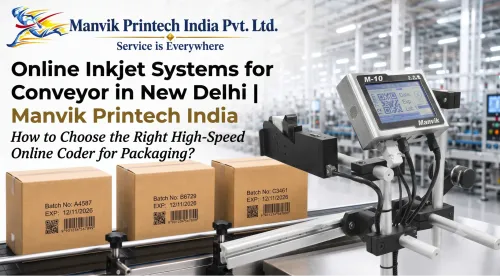
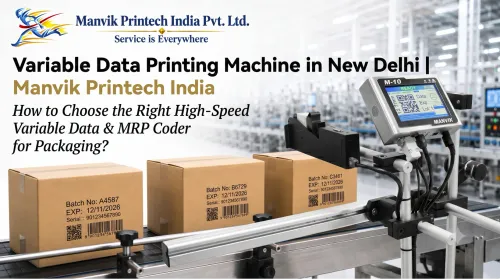
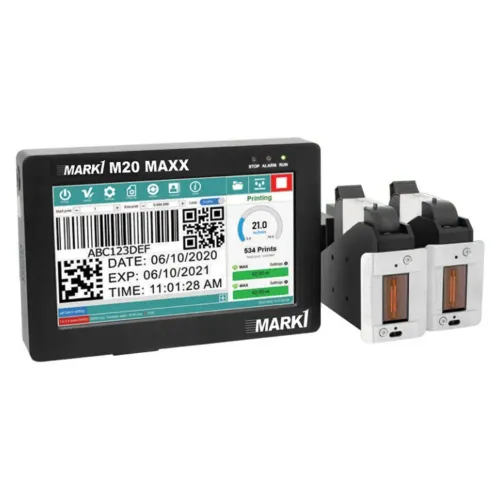
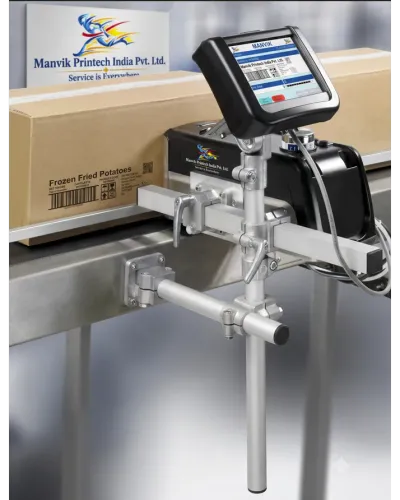
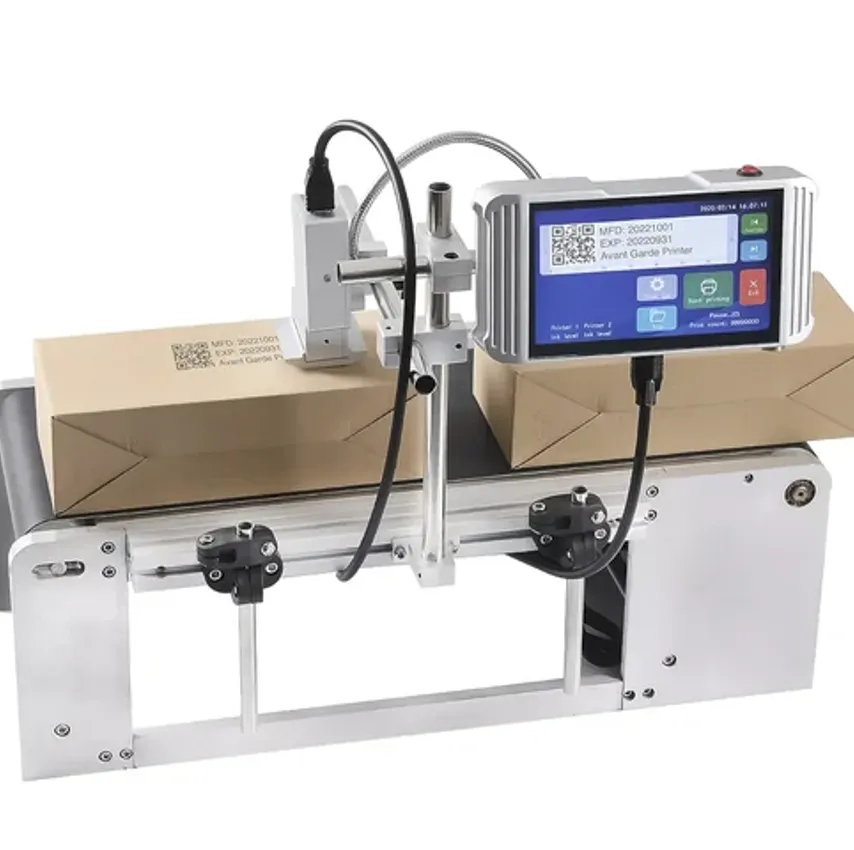
An inkjet batch coding machine prints variable information onto a product or its packaging using fine jets of ink, rather than mechanical stamps or pre-printed labels. The machine is typically mounted directly on or beside the production line, where it prints as products or packages pass beneath the print head.
Typical information printed includes:
- Batch or lot number
- Manufacturing and expiry dates
- MRP (maximum retail price)
- Barcodes and QR codes
- Logos and brand marks
- Serial numbers for individual unit tracking
Because the print content is digital, it can be updated instantly between batches — no need to change plates, stamps, or pre-printed stock.
Why Batch Coding Matters
Batch coding isn't just about printing a date. It plays a direct role in:
- Quality control — linking finished goods back to the specific batch, raw materials, and shift they came from
- Inventory management — helping distributors and retailers rotate stock correctly (first-expiry-first-out)
- Recalls — allowing a manufacturer to isolate and recall a specific batch rather than an entire product line
- Traceability — a legal and practical requirement across most regulated industries
This matters most in safety-sensitive sectors — food, pharmaceuticals, cosmetics, and FMCG — where incorrect or missing batch information can mean regulatory penalties, product recalls, or loss of customer trust.
Types of Inkjet Coding Technology
Inkjet coding covers a few different technologies, each suited to different production needs:
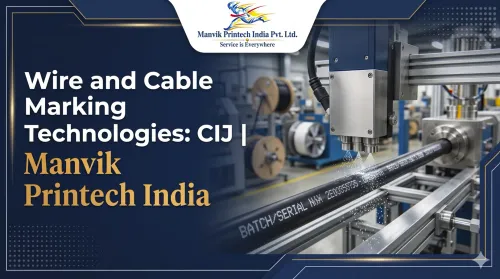
- Continuous Inkjet (CIJ): Sprays a continuous stream of ink droplets, charged and deflected to form characters. Well suited to high-speed lines and porous or uneven surfaces like cartons and pouches.
- Thermal Inkjet (TIJ): Uses heat to eject ink drops on demand, producing sharper, higher-resolution prints. Common for smooth surfaces like labels, cartons, and flexible film where print clarity matters — such as small barcodes or QR codes.
- Contact vs Non-Contact: Inkjet systems are non-contact — the print head never touches the product — which reduces wear and allows coding on delicate or curved surfaces, unlike contact methods such as hot stamping.
Machines are also available as manual, semi-automatic, or fully automatic/online systems, depending on whether they run as a standalone unit or are integrated directly into a moving production line.
Applications Across Industries
Food & Beverage: Printing manufacturing and expiry dates, batch numbers, and barcodes on pouches, bottles, cartons, and cans — often at high line speeds.
Pharmaceuticals: Batch numbers, expiry dates, and serialisation codes on strips, cartons, and bottles, where regulatory compliance is strict and traceability is mandatory.
Cosmetics & Personal Care: Batch codes and MRP printing on tubes, jars, and cartons, often on curved or reflective surfaces.
General Packaging: Cartons, pouches, labels, bottles, and jars across FMCG categories, printed on paper, cardboard, plastic, metal, glass, or foil surfaces.
Key Features to Look For
When evaluating an inkjet batch coding machine for packaging, consider:
- Print quality and readability — especially for small text, barcodes, and QR codes that scanners need to read reliably
- Printing speed — matched to your actual production line speed, not just rated maximum
- Surface compatibility — plastic, glass, metal, paper, or foil each behave differently with ink
- Ease of operation — touchscreen interfaces and simple menu navigation reduce operator training time
- Maintenance needs and consumable efficiency — how often print heads need cleaning, and how much ink or solvent the machine consumes
- Content flexibility — support for text, dates, batch numbers, barcodes, QR codes, and logos in a single setup
Benefits for Manufacturers
Switching to inkjet coding typically brings:
- Faster production with far less manual effort than stamping
- Uniform, professional-looking prints batch after batch
- Lower human error and greater consistency across shifts
- Stronger traceability and easier compliance readiness
- The flexibility to update batch information instantly without new plates or stock
Choosing the Right Machine
The right machine depends on matching a few variables:
- Product type and packaging material — porous cartons and pouches favour CIJ; smooth labels and film often suit TIJ
- Production volume and line speed — occasional short runs don't need the same machine as a continuous high-speed line
- After-sales support — availability of local service technicians and spare parts matters as much as the spec sheet
- Consumables availability in India — ensure ink, solvent, and cartridges are easily sourced locally to avoid line downtime
Why Choose Manvik Printech India Pvt Ltd
Manvik Printech India Private Limited is a New Delhi-based supplier of coding and marking solutions, offering inkjet batch coding machines, laser marking systems, and related consumables to manufacturers across India. Working with a Msme , Smb and Corporates , established supplier like Manvik Printech means faster installation support, ready access to spare parts and consumables, and a team that understands the specific compliance and packaging needs of Indian production lines.
Get in touch:
- Website: www.manvikprintechindia.com
- Phone: +91 99069 05312 / +91 93105 78992 / +91 83839 27209
- Email: ravi.sharma@manviktechnologies.in
- Location: New Delhi
Maintenance Tips
A few habits keep an inkjet coder running reliably:
- Clean print heads regularly to prevent clogging and print quality drop-off
- Use only the manufacturer's recommended inks and solvents
- Periodically check print alignment and settings, especially after a product or packaging change
- Provide basic operator training so staff can spot early signs of misuse or wear before they cause downtime
Conclusion
An inkjet batch coding machine is a practical, cost-effective investment for any manufacturer that needs reliable, flexible product identification — from a small food packaging unit to a full pharmaceutical production line. Done right, it delivers traceability, regulatory compliance, and a consistently professional finish on every batch. As Indian manufacturing continues to move toward tighter traceability standards and smarter production lines, choosing the right batch coding machine today sets up a more efficient, dependable packaging process for the years ahead.
Keywords