Laser Coding Machine in India: Choosing CO₂, Fiber or UV for Product Marking
A printed batch number is useful only if it remains readable until the product reaches the customer.
Ink can smear on a wet bottle. A label can peel from a carton. A stamp can become unclear after repeated handling. These problems are one reason manufacturers consider a laser coding machine in India for batch numbers, expiry dates, MRP, barcodes, QR codes, logos and serial numbers.
Laser coding does not use ink or ribbon. Instead, a focused laser beam changes, removes or engraves a controlled area of the product surface. The final mark depends on the material, coating, laser wavelength, power, speed and required appearance.
What is a laser coding machine?
A laser coding machine is a non-contact industrial system that marks fixed or variable information directly on a product or package. Software controls the message, while a scanning head directs the beam to the selected marking area.
It can be used for:
- Manufacturing and expiry dates.
- Batch and lot numbers.
- MRP and product codes.
- Serial numbers.
- 1D barcodes.
- QR and Data Matrix codes.
- Logos and product names.
- Traceability information.
- Part numbers and identification marks.
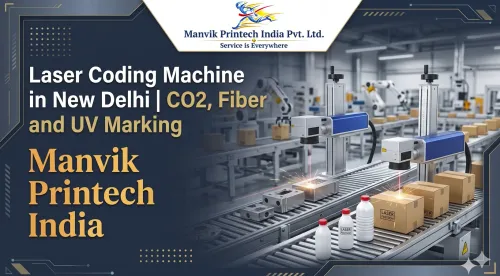
The machine may be installed beside a conveyor, packaging machine or extrusion line. A sensor can trigger the mark as each product passes. Rotary attachments and fixtures can be added when the product is cylindrical, irregular or too small to hold reliably by hand.
How does laser coding differ from inkjet printing?
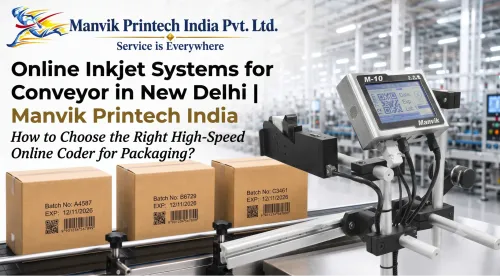
Inkjet printers place liquid ink on the surface. A laser changes the surface itself or removes a coating. This creates different advantages and limitations.
Laser coding may reduce the need for ink and solvent storage. It can be suitable where the mark must resist rubbing or where consumables are inconvenient. It does not mean that the machine is maintenance-free. Optics, extraction, cooling, safety systems and alignment still need attention.
Inkjet may remain more suitable where:
- The product surface is difficult for the selected laser.
- A temporary or changeable mark is required.
- Colour printing is needed.
- The packaging requires a particular ink appearance.
- The line already uses an inkjet system successfully.
The correct choice depends on the material and production conditions, not simply on whether laser coding sounds more durable.
CO₂, fiber or UV laser?
There is no single laser source for every product. The surface should be matched with the wavelength and marking process.
Laser typeCommon material applicationsTypical useCO₂ laserPaperboard, cartons, labels, glass, PET, plastic and some flexible filmsBatch and date coding on packagingFiber laserStainless steel, aluminium, brass, titanium and selected high-density plasticsPart marking, serial numbers, logos, barcodes and QR codesUV laserSelected plastics, glass, films, caps, electronics and heat-sensitive materialsFine or low-heat marking where other sources may damage the surface
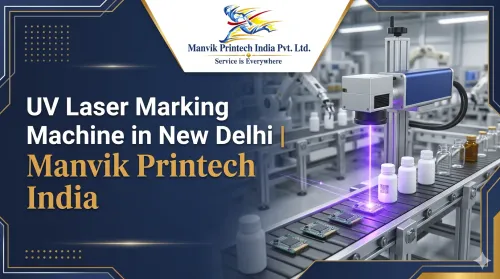
CO₂ lasers are commonly considered for non-metal packaging such as cartons, glass, PET and flexible materials. Fiber lasers are generally associated with metal components and durable industrial identification. UV lasers use a shorter ultraviolet wavelength and may be evaluated for materials that require lower thermal impact.
This table is a starting point, not a purchase decision. Plastic composition, colour, coating and surface treatment can change the result.
Applications in Indian industries
Pharmaceutical packaging
Pharmaceutical manufacturers may use laser coding for batch numbers, expiry dates, serialised information, barcodes and QR codes on cartons, labels, bottles or selected packaging components.
The code should be checked for contrast and scanning after the packaging has passed through handling and distribution conditions. A laser mark that looks attractive may still be unsuitable if it cannot be read reliably by the intended scanner.
FMCG and food products
FMCG, food and beverage companies may need coding on cartons, pouches, bottles, caps, cans, labels and films. Laser coding can be considered when the packaging material produces a clear mark and the production line can safely accommodate the system.
For food-related applications, the packaging, laser process, extraction arrangement and applicable product requirements should be reviewed before installation.
Automotive and engineering
Fiber laser systems are often evaluated for marking part numbers, serial numbers, logos, Data Matrix codes and traceability information on metal parts. Applications may include tools, bearings, shafts, fasteners, electrical components, enclosures and automotive parts.
The required mark may be a light surface contrast or a deeper engraving. These are different jobs and should not be quoted as though they require the same settings.
Cables, pipes and extrusion lines
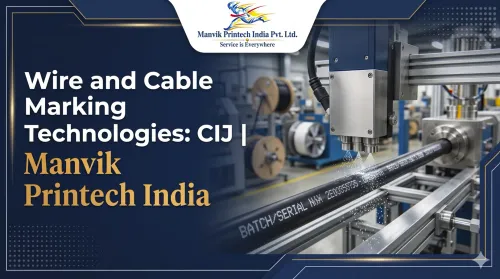
Laser coders may be integrated with continuous production lines for identification on cables, pipes, profiles and other extruded products. The selection depends on line speed, material, movement and required text size.
Problems a laser coder can help address
Codes disappear during handling
A mark may be lost when labels peel or ink rubs against another pack. A properly selected laser process can create a more durable identification mark.
Consumable management is inconvenient
Inkjet systems require ink and, in some configurations, make-up fluid. Laser systems do not print with ink or ribbon, although they still require maintenance and safe operation.
Product information changes frequently
Laser software can handle changing batch numbers, serial numbers and product codes. Data can be imported from a file, database, scanner or production-control system when the configuration supports it.
The available marking area is small
Laser systems can mark fine text and dense codes in compact areas. The result depends on lens selection, material, contrast, code size and production speed.
Separate labels are causing traceability issues
Direct marking removes the need for a separate identification label in some applications. It is not suitable for every surface, so a test should be carried out before changing the packaging method.
Common mistakes before buying
Choosing by wattage alone
A higher-power laser is not automatically better. The required power depends on material, mark depth, speed, area and desired appearance.
Testing on the wrong sample
A laser may mark plain stainless steel well but produce a different result on polished steel, coated aluminium or a plastic with another additive. Test the exact product or packaging.
Ignoring the code scanner
A mark can look clear to the eye but fail under a warehouse scanner. Test the barcode or QR code with the equipment that will be used in practice.
Forgetting product movement
If the product rotates, vibrates or changes height, the mark may shift or distort. Guides, fixtures, encoders or rotary attachments may be needed.
Treating safety as an accessory
Laser systems require suitable guarding, interlocks, warning controls and operating procedures. Safety provisions should be part of the machine design and installation plan.
How to select a laser coding machine in India
Before requesting a quotation, provide:
- Product or packaging sample.
- Material, colour and surface finish.
- Required text, logo or code.
- Marking area and product dimensions.
- Production speed and product spacing.
- Required mark depth and appearance.
- Manual, semi-automatic or inline operation.
- Scanner or verification requirement.
- Available mounting and extraction space.
- Data-integration requirement.
- Operating hours and production environment.
- Installation location and service expectations.
Ask for a sample test and record the result. Check contrast, readability, cycle time and resistance to rubbing or cleaning. If you are comparing laser with TIJ or CIJ, test all technologies on the same product.
Laser coding solutions from Manvik Printech India
Manvik Printech India, based in New Delhi, can discuss laser coding and marking requirements for manufacturers in Delhi NCR and businesses in western and southern India.
The application should be reviewed before selecting CO₂, fiber or UV. Share the material, required code, line speed and sample product so the proposed system can be matched to the actual job.
Visit Manvik Printech India to enquire about laser coding machines, barcode and QR-code marking, sample testing and production-line integration. Add your verified telephone number and official email address before publishing this page.
FAQs
What does a laser coding machine print?
It can mark batch numbers, manufacturing dates, expiry dates, MRP, serial numbers, barcodes, QR codes, logos and traceability information.
Is laser coding permanent?
The mark can be highly durable, but durability depends on the material, mark type and exposure to abrasion, chemicals, heat and cleaning. A sample test is necessary.
Which laser is suitable for metal?
Fiber laser systems are commonly evaluated for stainless steel, aluminium, brass, titanium and other metal parts. The alloy and surface finish still need testing.
Which laser is suitable for cartons and plastic packaging?
CO₂ lasers are commonly considered for many cartons, labels, plastics, glass and films. UV may be evaluated for selected heat-sensitive or difficult materials.
Can a laser coding machine print QR codes?
Yes, provided the code size, contrast, surface and scanning conditions are suitable. Test the marked code with the intended scanner.
Does a laser coder need ink?
No. It marks by changing or removing material or coating. It still requires electrical power, safety equipment, optics care and planned maintenance.
Is a laser coder better than a TIJ printer?
Not in every application. Laser is often considered for durable direct marking, while TIJ is often used for high-resolution ink printing on cartons, labels and packaging. Product material and line conditions should decide.
Keywords