UV Laser Printer in India: Fine, Permanent Marking for Plastic, Glass and Electronics
A mark on a plastic cap can melt if the process puts too much heat into the surface. A QR code on glass can crack or lose contrast if the wrong laser settings are used. On a PCB or medical component, even a small amount of deformation may affect the part.
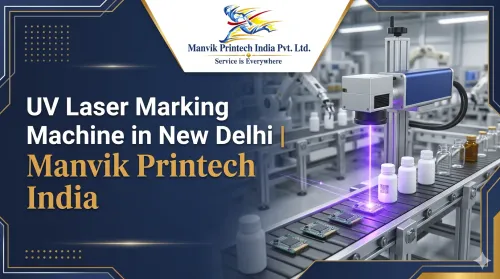
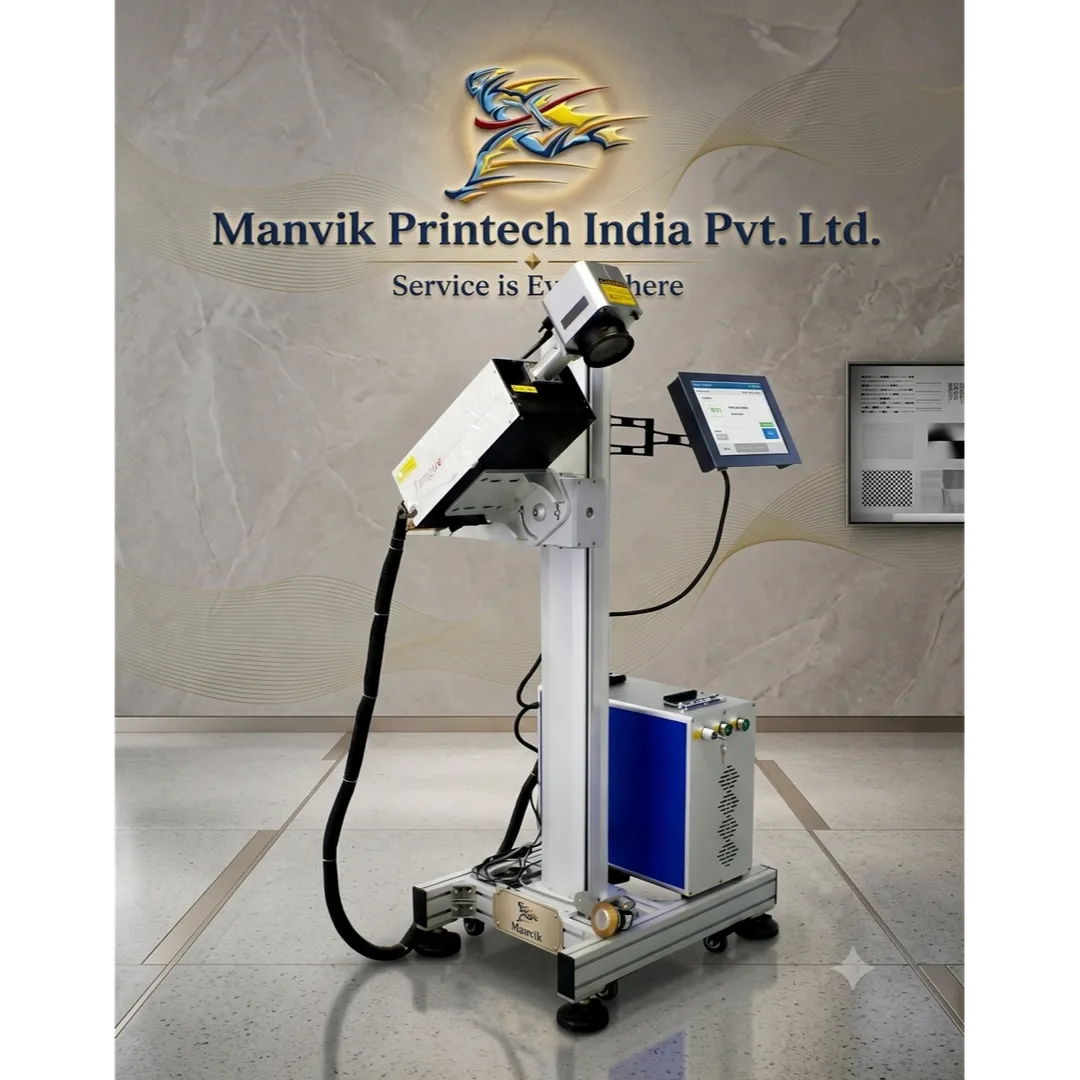
A UV laser printer in India is considered for these applications because it uses a short-wavelength ultraviolet laser to create fine marks with relatively low heat input. UV laser systems commonly operate at around 355 nm and are used for marking selected plastics, glass, ceramics, electronic components, medical products, films and coated surfaces.
The term “UV laser printer” is often used in the market, although the equipment is more accurately described as a UV laser marking machine or UV laser coder. It does not print with ink. It marks by changing the surface or coating with a focused laser beam.
What does a UV laser printer do?
A UV laser system can mark fixed or variable information directly on a product. Depending on the material and process settings, it may create a colour change, surface contrast, coating removal or shallow engraving.
Common applications include:
- Batch numbers and dates.
- Serial numbers.
- Product names and logos.
- Barcodes.
- QR codes and Data Matrix codes.
- Micro text.
- PCB identification.
- Traceability marks.
- Cosmetic and pharmaceutical packaging codes.
- Component identification.
The actual mark depends on the product. A UV laser may produce a white mark on one plastic, a dark mark on another and a frosted mark on glass. Sample testing is necessary before confirming the machine.
Why use UV laser marking?
Low-heat processing
UV marking is often called “cold marking” because the short wavelength can interact with the material through a photochemical process with less heat transfer than some longer-wavelength laser processes. This can reduce the risk of melting, burning or deformation on suitable materials.
“Low heat” does not mean “no heat.” The result still depends on power, pulse settings, speed, repetition rate, focus and the material’s composition.
Fine detail
UV lasers are used for small text, high-density codes and detailed graphics. The short wavelength can produce a small spot and fine edge detail when the machine is correctly configured. This makes UV worth evaluating for electronics, PCB traceability, small plastic parts and glass components.
Permanent product identification
A UV mark can be more durable than a surface label or ink mark in selected applications. Durability depends on whether the mark is on the product itself, on a coating, or on a packaging layer that may later be scratched or exposed to chemicals.
No ink or ribbon
UV laser marking does not require ink or thermal-transfer ribbon. This can simplify consumable handling, but the machine still requires optics care, extraction, safety controls and planned maintenance.
Where are UV laser printers used in India?
Pharmaceutical and medical packaging
UV laser systems may be evaluated for marking plastic bottles, caps, medical-device housings, labels and selected packaging materials. Applications include batch numbers, serialisation, QR codes and traceability information.
For pharmaceutical products, the code must be checked for contrast, scan reliability and resistance to the actual handling and packaging process. Product-specific and regulatory requirements should be reviewed by the manufacturer before production approval.
Cosmetics and personal-care products
Glass bottles, plastic containers, caps and tubes may require logos, batch details, QR codes or product identification. UV marking can be considered where ink adhesion is poor or where a direct mark is preferred.
Electronics and PCBs
PCBs, flexible circuits, connector housings, IC packages and electronic enclosures may require compact serial numbers, Data Matrix codes or traceability marks. Fine marking and controlled heat input are important in these applications.
Glass products
UV lasers may be used for QR codes, logos, text and identification marks on glass bottles, panels, lenses and laboratory components. The glass composition, thickness, finish and desired appearance affect the result.
Plastics and polymer components
Possible applications include ABS, PC, PVC, PP, PE and other polymer products. The exact result depends on additives, pigment, flame retardant, surface treatment and colour. Materials with similar names can behave differently during marking.
UV laser versus fiber and CO₂ laser

No laser source is suitable for every substrate. A supplier should test the actual part or package instead of recommending a machine only from its appearance or advertised power.
Problems UV laser marking can help solve
Ink does not adhere to the surface
Smooth plastic, glass and coated components can be difficult for conventional ink. Direct laser marking may remove the need for a wet-ink surface mark in selected applications.
Plastic is melting or discolouring
A conventional laser or excessive process energy may damage a sensitive plastic. UV can be evaluated when a smaller thermal effect is required, but parameters must be developed for the exact grade.
The code area is very small
A UV laser can be considered for small text, logos, micro codes and compact traceability marks. The code still needs enough physical size and contrast for the intended scanner.
Labels are peeling
Direct marking may reduce dependence on adhesive labels for selected products. The decision should include product appearance, durability, production speed and traceability requirements.
The mark is too deep or visually harsh
A UV system can be adjusted for surface contrast rather than deep engraving in some applications. The desired appearance should be defined during sample testing.
What should be checked before buying?
Share the following information with the supplier:
- Material type and grade.
- Product colour and surface finish.
- Coating, varnish or lamination details.
- Required text, logo, barcode or QR code.
- Available marking area.
- Required mark colour and appearance.
- Product speed and spacing.
- Manual, fixture-based or online operation.
- Required scan distance and verifier.
- Whether fumes or particles are generated.
- Available enclosure and extraction arrangement.
- Expected daily operating hours.
A sample should be tested before purchase. Check the mark immediately and after rubbing, cleaning, handling, storage and scanning. For glass or plastic, inspect the product for cracks, warping, whitening or unwanted surface damage.
Safety and installation
A UV laser is not a normal desktop printer. The installation should include appropriate guarding, interlocks, warning controls, operator procedures and, where required, fume extraction. The final arrangement depends on the laser class, machine design and application.
The supplier should also explain:
- Lens and marking-field options.
- Product fixture requirements.
- Cooling arrangement.
- Maintenance schedule.
- Software and data connection.
- Spare parts and service.
- Operator training.
- Safety documentation.
These details affect the total cost and the suitability of the machine for production.
UV laser printer support from Manvik Printech India
Manvik Printech India, based in New Delhi, can discuss UV laser marking requirements for customers in Delhi NCR and industrial businesses in western and southern India.
The first step should be an application review. Share the product sample, material details, required code and line speed. Based on the result, a UV laser, fiber laser, CO₂ laser, TIJ printer or CIJ printer may be considered.
Visit Manvik Printech India to enquire about UV laser printers, barcode and QR-code marking, sample testing and production-line integration. Add your verified telephone number, official email address, machine configuration and warranty information before publishing the page.
FAQs
What is a UV laser printer?
A UV laser printer is an industrial UV laser marking machine that creates text, logos, serial numbers, barcodes and QR codes directly on suitable materials without using ink.
What wavelength does a UV laser use?
Many UV laser marking systems use a wavelength of approximately 355 nm. The actual specification depends on the laser source and machine configuration.
Can a UV laser mark plastic?
It can mark many types of plastic, but the result depends on the polymer, pigment, additives, coating and desired mark. Test the actual product before purchase.
Can it mark glass?
UV lasers can be evaluated for marking glass, but the glass type, thickness, surface and desired contrast must be tested.
Can a UV laser mark QR codes?
Yes. It can mark QR codes and Data Matrix codes when the code size, contrast, surface and scanning conditions are suitable.
Is UV laser marking permanent?
It can create a durable mark, but durability depends on the material, marking method and exposure to abrasion, chemicals, heat and cleaning.
Is UV laser better than fiber laser?
Neither is automatically better. UV is often considered for sensitive, non-metal or fine-detail applications, while fiber is commonly selected for metal marking. The material and required result should decide.
Keywords